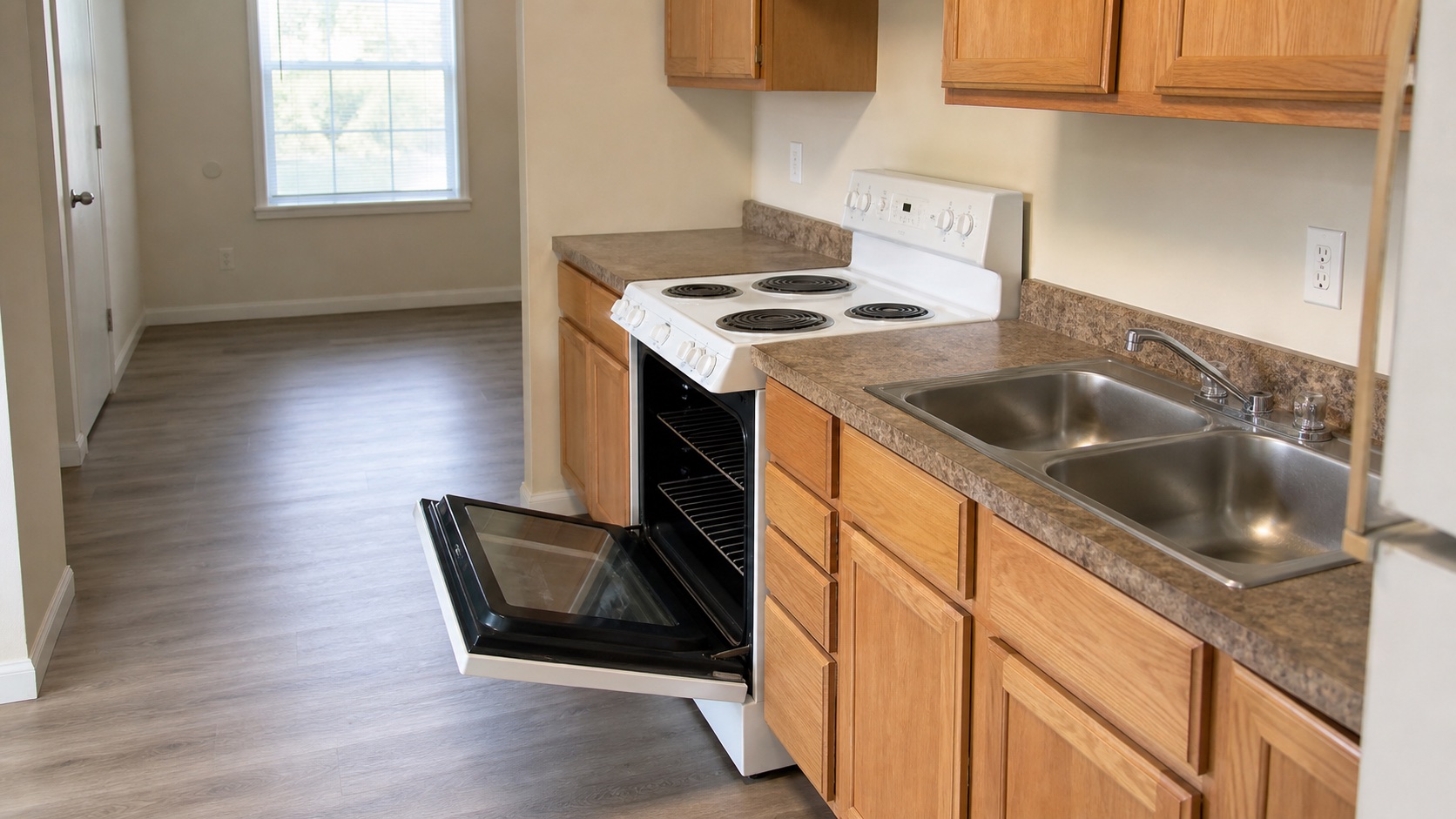
The move-out statement says "$180 cleaning," but the only photo is a wide shot of an empty kitchen. That image proves the room was empty. It does not show whether the oven racks, sink basin, stovetop rings, or baseboards were clean when the keys left your hand.
Before you argue with the charge, look at the photos the same way the charge will be read: one named spot at a time.
Start with the exact charge
A cleaning fee usually points to one place. If the statement says "oven cleaning," start with photos of the oven door, racks, stovetop, and inside glass. If it says "bathroom cleaning," look for the sink, toilet base, tub ledge, mirror, and floor corners.
The wide room photo still helps. It proves which room the close-ups belong to. It just cannot answer a charge about one specific spot.
Wide photos prove the room, not the spot
A wide move-out photo can make a room look clean while hiding the thing someone is charging for. Grease around a burner, crumbs in a drawer, soap film on a tub ledge, dust on a fan blade, and streaks on a glass door are all easy to miss from across the room.
Use wide shots as anchors, then add the close-ups. The sequence matters: kitchen wide shot, oven, sink, counters, floor corners. Hall bath wide shot, sink, tub, toilet base, mirror. Now the person reviewing the fee is not guessing where each photo came from.
Take the close-ups before the room changes
Move-out photos are strongest before keys are returned and before anyone else walks through. A cleaner can wipe a counter, a maintenance visit can move an appliance, and a walkthrough can shift trash or dust.
The cleanest timing is after your final cleaning and before anything else happens in the unit. Use the same route you would use for a move-out photo record: room view first, then the spots most likely to be reviewed, then any repaired or cleaned areas that could be misunderstood later.
Give each close-up a room anchor
A close-up of a sink drain or cabinet corner is weak if nobody can tell where it came from. Pair each detail photo with a wider frame and a plain label: "kitchen sink basin after cleaning," "hall bath tub ledge," or "primary bedroom baseboard under window."
The room anchor matters most for repeated surfaces. Three white baseboard photos look identical in a camera roll. One wide bedroom photo followed by "north wall baseboard" and "closet door track" makes the same details reviewable.
Use the same words in photos, notes, and receipts
A receipt that says "apartment cleaned" is broad. A message that says "oven racks and fridge shelves cleaned June 22" lines up better with photos of those exact objects.
Use the same object names across the record, the message, and any service receipt. If the photo says "bathroom vanity top," the note or receipt should not switch to "counter area." Consistent names reduce the work of matching a charge to the right image.
How door.lease helps
For this scenario, door.lease keeps room-labeled photos, notes, and a shareable report together, so the kitchen sink photo or bathroom vanity photo does not get separated from the move-out record it belongs to.
Common questions
Is one wide move-out photo enough for a cleaning fee? Usually not. A wide photo gives context, but a cleaning fee often turns on a specific spot like an oven, sink, tub, toilet base, refrigerator shelf, floor corner, baseboard, or window track.
Should I photograph after cleaning or before cleaning? Photograph after your final cleaning if you are making a move-out record. If there was a specific mess or repair before cleaning, keep that earlier image separate and clearly labeled.
Can photos guarantee that a cleaning charge is removed? No. Photos create a clearer condition record, but leases, local rules, invoices, inspection notes, and the reviewer all affect how the record is used.
door.lease is documentation support, not legal advice; local rules and lease terms may affect how a record is used.