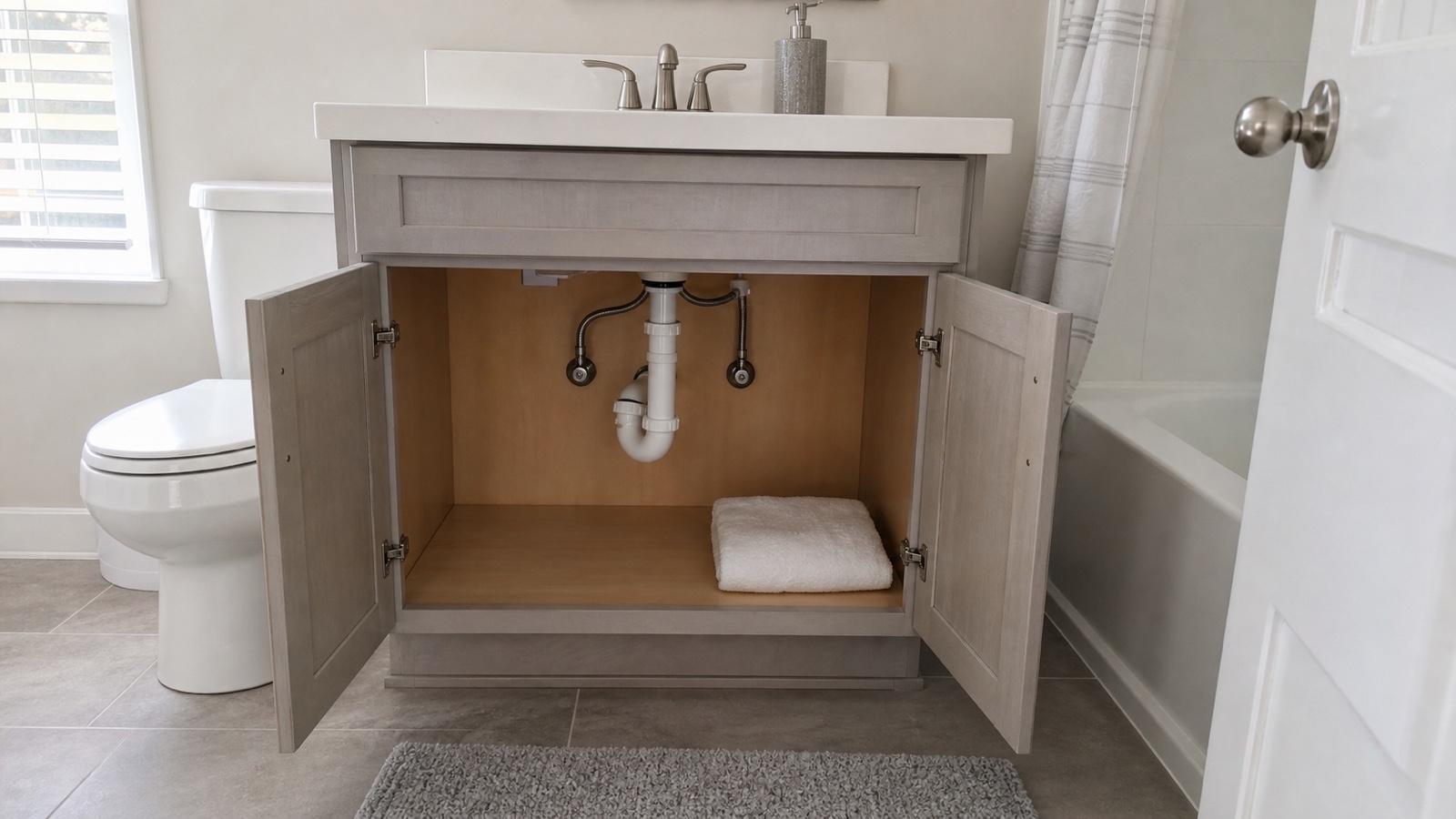
The plumber leaves at 2:15 p.m. and the cabinet under the bathroom sink looks dry. By dinner, a dark crescent appears along the back panel, and yesterday's maintenance request no longer tells the full story.
The first photo says there was a problem. The follow-up photo shows whether the fix changed the condition, stopped the leak, or left a new mark that should not be explained from memory later.
The second photo records the outcome
A first maintenance photo freezes the problem: water beading under the P-trap, a towel on the cabinet floor, or a ceiling spot spreading over the hallway light. It is useful because it explains why the request was made.
The follow-up photo answers a different question. After the repair visit, is the cabinet dry, is the towel still damp, did the stain stop expanding, or did the access panel leave a fresh scrape on the wall? A clear after-repair image turns the record from "something happened" into "this is what changed."
Take one frame before you put everything back
The best follow-up maintenance photo is usually taken before shampoo bottles, cleaning spray, pans, or storage bins go back into the space. One wide frame of the empty cabinet or appliance area shows what the repaired spot looked like before daily use covered it again.
For an under-sink repair, open both cabinet doors and photograph the pipe, shelf, back panel, and floor line in one shot. Then take one closer image of the exact place that was wet or repaired. That small pause is easier than trying to recreate the scene two weeks later.
Drying stains need a sequence, not one dramatic close-up
A water stain can look worse before it looks better. A brown ceiling edge may darken while it dries, a cabinet base may keep a faint ring, and a wall patch may stay visible after the leak stops. One close-up cannot show whether the mark is growing, fading, or unchanged.
Use the same angle for each update: the whole ceiling panel, then the stain edge; the whole vanity cabinet, then the back corner. That sequence pairs naturally with a water-stain maintenance request because it shows what changed after the first report.
Photograph what moved during the repair
Repairs change the room even when they solve the issue. A technician may pull out a refrigerator, remove the under-sink shelf liner, open an access panel, shift a washer hose, or leave a cabinet door misaligned. Those details can be easy to forget because the original problem gets all the attention.
After the visit, photograph the item or surface that moved. If the dishwasher was slid forward, capture the floor under the front edge. If an access panel was opened, photograph the panel and surrounding paint. The point is not to criticize the repair; it is to record the visible condition after the room changed.
Match the follow-up to the original request
Follow-up photos are easier to use when they use the same room name, object name, and angle as the first record. "Hall bath vanity after repair, dry cabinet floor" is clearer than a loose image of white plumbing with no location.
If the first request used a maintenance request with photos, the follow-up should answer that same request instead of starting a separate story. The maintenance photo guide approach still applies: room context first, exact spot second, plain words for anything that changed.
How door.lease helps
For this scenario, door.lease keeps follow-up photos tied to the original maintenance context and timestamps, so a dry cabinet photo taken after the plumber leaves does not get separated from the leak report that explains why it matters.
Common questions
Should I take follow-up maintenance photos if the repair looks finished? Yes, if the original issue left visible condition behind. One room-context photo and one detail photo are usually enough to show the after-repair state.
How long should I keep updating photos after a leak? Update the record when the visible condition changes: after the repair visit, after drying, if a stain grows, or if a cabinet or floor area still looks damp.
Can a follow-up photo prove the repair was done correctly? No. It records visible condition at a specific moment. It cannot show hidden plumbing, wiring, or behind-wall conditions, and local rules and lease terms may affect how the record is used.
door.lease is documentation support, not legal advice; local rules and lease terms may affect how a record is used.