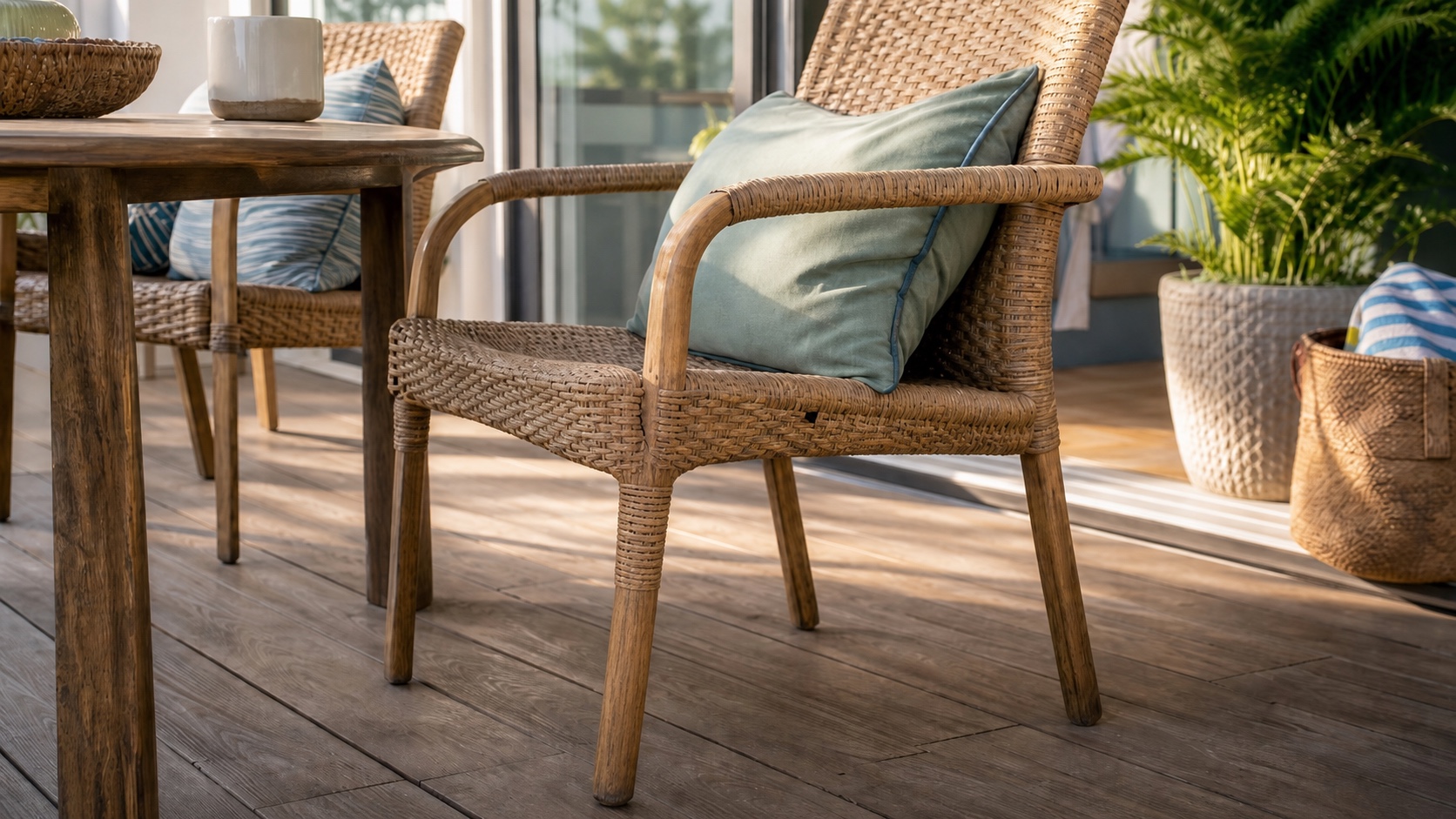
The patio looked ready for the next guest by noon, but the broken chair had already been dragged to the storage closet. A close-up of the cracked leg still helps, but the stronger photo is the one taken before the cleaner moved it from the table, cushion, and floor marks that explain where it sat.
The crack needs a place, not just a close-up
A patio chair close-up can turn into a mystery photo fast. The split wicker, loose front leg, or cracked foot matters more when the first frame shows the chair at the outdoor table, beside the matching set, and on the same stone paver or deck board where the cleaner found it. That wide photo gives the checkout damage report a location before anyone starts shifting furniture.
Photograph it before the reset hides the timing
Turnover work changes the scene even when nobody is trying to hide anything. A cleaner may stack chairs, sweep the patio, pull cushions inside, or move a cracked chair for safety before the host sees the message. The photo taken as found is different from the photo taken after the patio is staged. If the cleaner has a fixed route, the damaged chair belongs in the first pass, before the vacation rental cleaner inspection checklist moves from flags to reset photos.
A furniture charge turns on the exact piece
Outdoor furniture sets are repetitive: four wicker chairs, matching cushions, the same table legs, the same patio floor. If a replacement or repair charge names one chair, the record should name that chair too. Use plain labels like patio dining chair closest to sliding door, front-left leg split, blue cushion on seat, and matching chair behind table. The goal is not to argue the charge in the photo caption. It is to make sure the photo and the line item point to the same object.
Keep weather and guest use separate in the note
Patio furniture can crack from sun, wet cushions, loose screws, guest use, or old wear, and a photo usually cannot explain the cause by itself. Keep the note factual: found after July 7 checkout, crack on front-left leg, chair moved aside before sweeping. If there is an older turnover photo showing the same chair intact, pair the two angles. If there is not, the honest record is still useful because it says what was visible and when it was found during the turnover pass.
Do not bury the chair under general cleaning
A patio chair problem is easy to lose inside a broad cleaning message: patio swept, towels replaced, chair broken. Split the item from the cleaning work. The cleaning note can say the patio was reset; the furniture note can show the cracked leg, the matching set, and whether the chair was removed from guest use. That separation helps a short-term rental damage report read like a clear handoff instead of a rushed text thread.
How door.lease helps the patio handoff
In door.lease, keep the wide patio shot and the chair-leg close-up under the same area label, then share the report with the owner, co-host, or cleaner who needs to review the repair or replacement context before the next stay.
Common questions
What patio chair photos should I take after guest checkout?
Start with a wide patio photo that shows where the chair sits, then add a close-up of the cracked leg, split wicker, bent foot, or loose joint. Include the table, matching chair, cushion, floor, or sliding door in at least one frame so the chair is identifiable later.
Should the cleaner move the damaged chair before taking photos?
If it is safe to leave it in place for a moment, photograph it as found before moving or stacking it. If it has to be moved for safety or cleaning, note that it was moved and photograph both the original area and the damage.
Do patio chair photos decide whether a guest pays a charge?
No. Photos create a clearer checkout record, but platform rules, owner instructions, invoices, and the review process affect how that record is used.
door.lease is documentation support, not legal advice; local rules and lease terms may affect how a record is used.