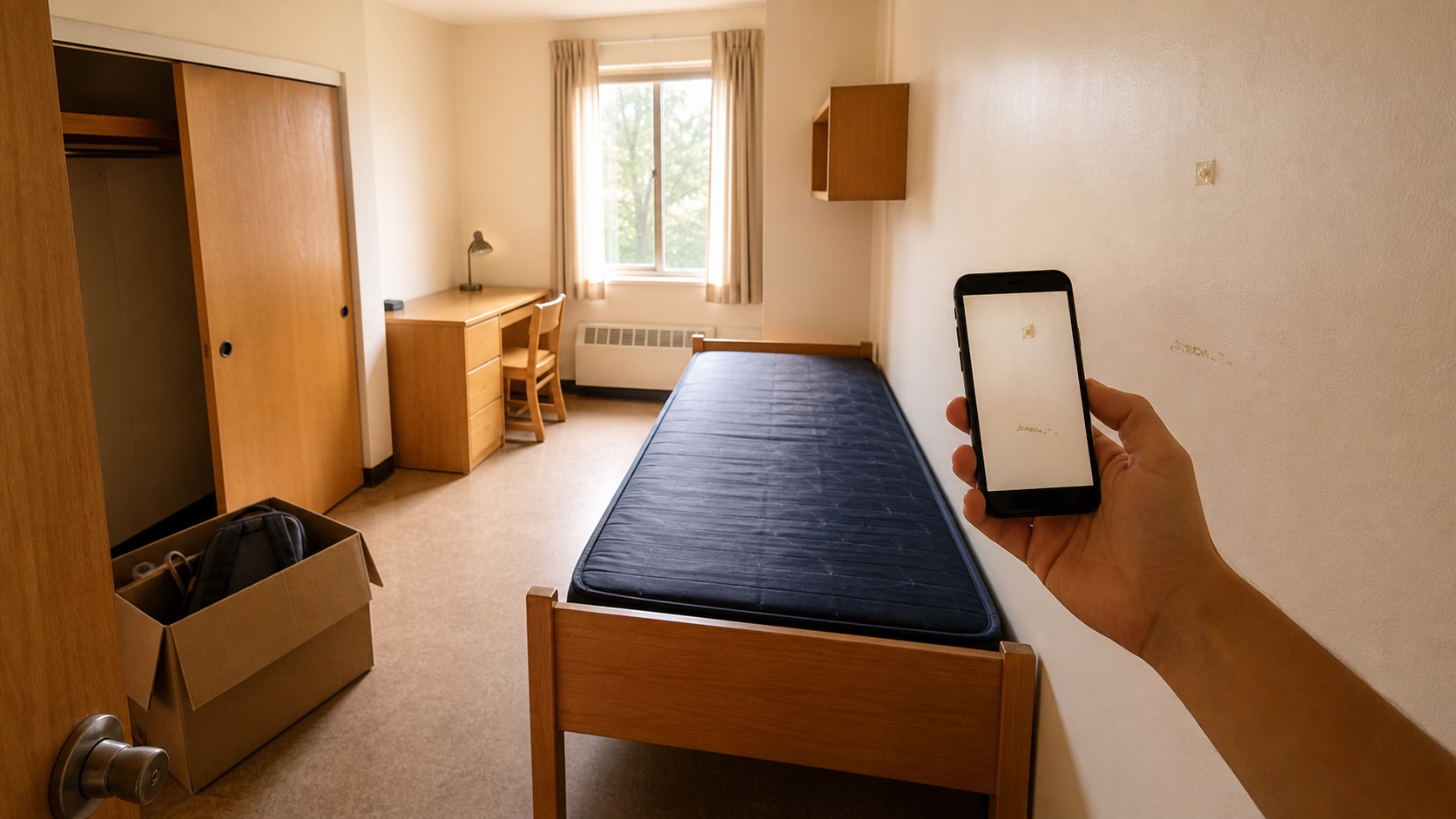
The mattress is bare, the desk drawers are empty, and the closet door is finally visible again. If the last photo was taken while bins were stacked by the bed, the wall scuff, adhesive mark, and mattress edge are still trapped in a half-packed room.
The final photo answers a different question
Move-in photos show what the room looked like before bedding, posters, laundry bags, and desk supplies arrived. The last photo after packing shows what is left when those things are gone. That second moment matters because the room is finally visible again: mattress seams, wall marks, closet tracks, desk edges, door hardware, and the floor line beside the bed.
Packing changes what the room can show
A half-packed dorm room hides the exact details people later ask about. A suitcase blocks the closet track, a comforter covers the mattress edge, a backpack sits over the desk chip, and poster tape stays on the wall until the final hour. Take the follow-up when the surfaces are uncovered, not when the room is still full of moving supplies.
Use the same frame you used at move-in
The final pass works best when it echoes the first one. Stand near the doorway for the wide room photo, then repeat the bed wall, desk, closet, and door angles. If the supplied furniture is the issue, the dorm mattress and furniture checklist handles those item-level details; the final empty-room photo is the bridge between move-in memory and move-out condition.
Take it before checkout pressure starts
The worst time to rebuild a photo set is when keys are in your hand and someone is waiting in the hall. Follow the residence hall, housing office, landlord, or property process you were given, but keep a quiet minute before checkout or key return for the room-wide final pass. One wide shot and a few exact close-ups are better than a camera roll full of boxes.
Where door.lease fits the final pass
For this final pass, door.lease keeps the empty-room wide shot, the wall-mark close-up, the room label, and the timestamp together so the move-out record is not scattered across a rushed camera roll.
Common questions
Is a final empty-room photo different from move-in photos?
Yes. Move-in photos show the starting point before the room is used. A final empty-room photo shows the visible condition after personal items, bedding, and wall decor are removed.
Should I photograph before or after removing bedding and posters?
Photograph after those items are removed and before checkout or key return, when the mattress, wall, desk, closet, and floor are visible. If your housing office or landlord gives a different process, follow that process.
Should the photo include keys, forms, or IDs?
Keep private documents, IDs, and official forms out of the frame. A key on a desk or a packed box can show timing, but the main subject should be the room condition.