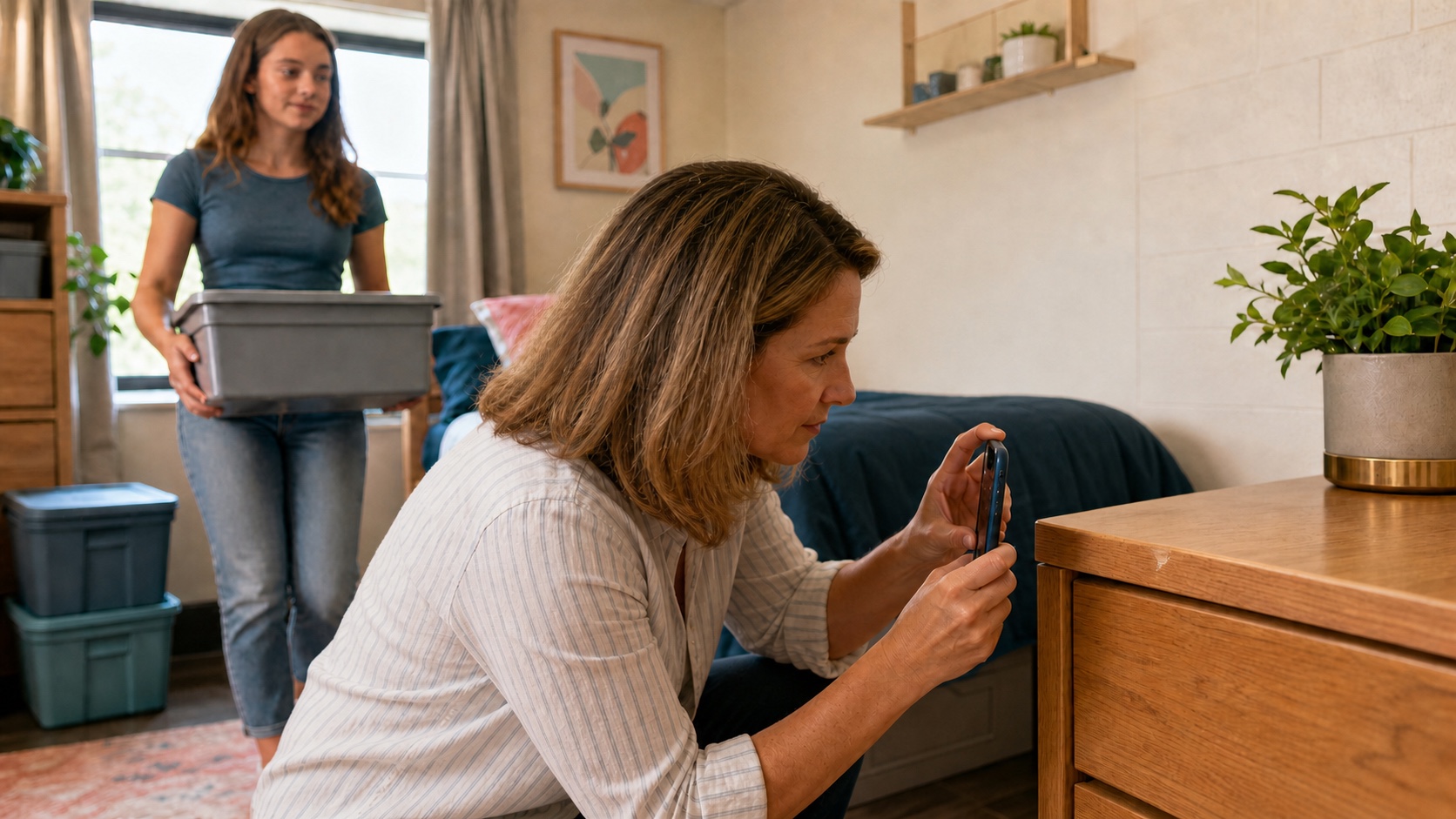
Your parent spots a chip in the supplied desk while you are carrying the third bin upstairs. They take the photo, load the car, and drive home with the only close-up still on their phone.
The photo-taker is not always the person who needs the file
Dorm move-in is full of split jobs. One person carries bedding, another checks the closet, and someone else notices the chipped desk edge. If the helper takes the picture, the student's move-in set is incomplete until that exact file changes hands. A spoken promise to send the photos later is easy to lose after the car is packed and the room fills with boxes.
The chip needs a room label, not a family group chat
Supplied dorm furniture repeats from room to room. A close-up of brown laminate could be the desk, dresser, or shelf, and six nearly identical desk photos can blur together by spring. Pair the close-up with one wider frame that shows the desk beside the bed or window, then label the set with the building and room reference the student actually uses. Keep names, IDs, keys, and official paperwork out of the frame.
Finish the handoff before the helper leaves campus
The cleanest moment to transfer the set is while both people are still in the room. Open the shared folder or report on the student's phone and confirm the desk chip, wall mark, mattress edge, and room-wide photo are present. The dorm mattress and furniture move-in checklist covers what to capture; this handoff makes sure the student can find those files without asking someone to search an old camera roll months later.
The housing form and the photos do different jobs
A residence-hall or housing-office form may have a line for desk damage, but the words chipped desk edge do not show which corner, how large the chip looked, or what surrounded it. Follow the process your school or property gives you, and keep the matching photo set accessible. If a school-specific checklist is available through the campus directory, the same rule applies: the student should be able to open both the submitted description and the original room photos.
Checkout exposes the missing handoff
The gap usually stays invisible until the room is stripped again. The student sees the same desk chip at checkout, but the move-in photo belongs to a helper who is now hundreds of miles away and searching a camera roll by month. A labeled set that was handed over on move-in day lets the student compare the same desk edge, wall, and mattress while the room is still open. A sample move-in report shows why room names and matching close-ups make that later review faster.
How door.lease helps with the handoff
In door.lease, keep the wide dorm-room photo and the chipped-desk close-up under the same room label, then share the report with the student before the move-in helper leaves campus.
Common questions
Who should keep the dorm move-in photos?
The student should have direct access to the original room photos, even when a parent, roommate, or other helper took them. The helper can keep a copy, but the student's set should not depend on someone else's camera roll.
What if the parent or helper has already left with the photos?
Transfer the original files as soon as possible, then label the room-wide frame and close-ups while everyone still remembers the desk, wall, mattress, closet, and timing. Avoid relying on a screenshot that removes useful context.
Do dorm condition photos replace a housing-office form?
No. Follow the residence hall, housing-office, landlord, or property process you were given. Photos can add visible room and object context, but they do not replace required forms or instructions.
door.lease is documentation support, not legal advice; local rules and lease terms may affect how a record is used.